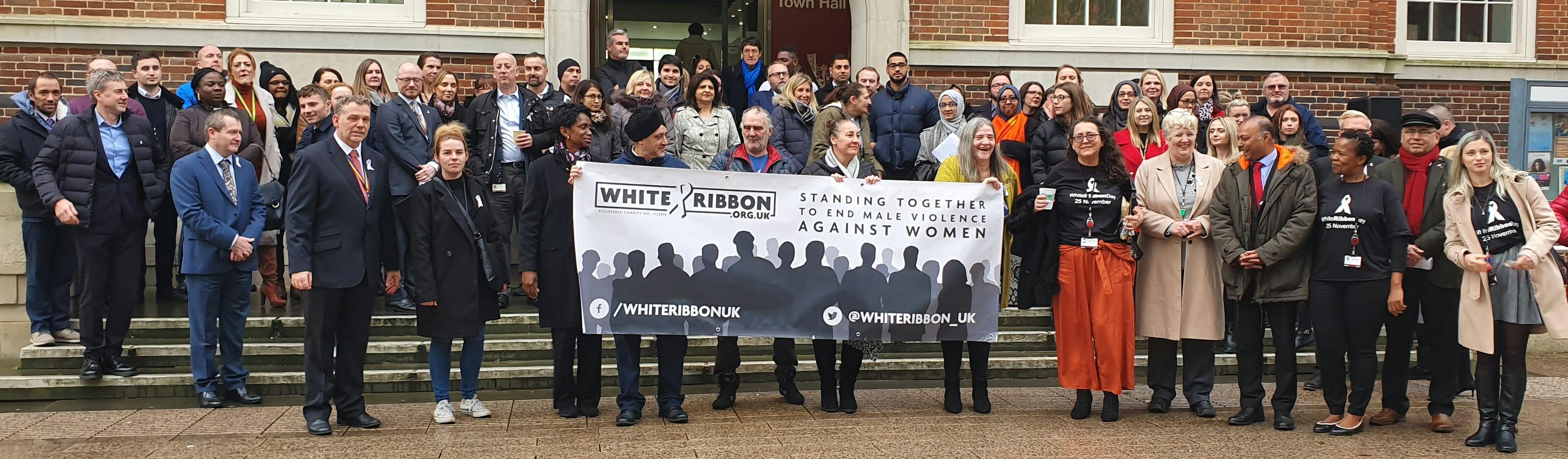
16 Days of Activism Against Gender-Based Violence 2021
From 25 November, the International Day for the Elimination of Violence against Women, to 10 December, Human Rights Day, the 16 Days of Activism against Gender-Based Violence Campaign is a time to galvanize action to end gender-based violence around the world.
The mission of the global campaign is:
- raising awareness about gender-based violence as a human rights issue at the local, national, regional and international levels
- strengthening local work around violence against women
- establishing a clear link between local and international work to end violence against women
- providing a forum in which organisers can develop and share new and effective strategies
- demonstrating the solidarity of women around the world organising against violence against women
- creating tools to pressure governments to implement promises made to eliminate violence against women
Communities all over the world held events and raised their voices to tackle gender-based violence. In 2020, Barking and Dagenham reflected on the impacts of gender-based violence in the context of a global pandemic.
Every day throughout the 16 Days we invited you to join an online conversation with us. We posted a piece of learning or information about local services from different perspectives and you discussed your thoughts and feelings in this space.
If you or a friend is need of support, please see links to in the chats for information or head to https://www.lbbd.gov.uk/domestic-abuse-and-sexual-violence
From 25 November, the International Day for the Elimination of Violence against Women, to 10 December, Human Rights Day, the 16 Days of Activism against Gender-Based Violence Campaign is a time to galvanize action to end gender-based violence around the world.
The mission of the global campaign is:
- raising awareness about gender-based violence as a human rights issue at the local, national, regional and international levels
- strengthening local work around violence against women
- establishing a clear link between local and international work to end violence against women
- providing a forum in which organisers can develop and share new and effective strategies
- demonstrating the solidarity of women around the world organising against violence against women
- creating tools to pressure governments to implement promises made to eliminate violence against women
Communities all over the world held events and raised their voices to tackle gender-based violence. In 2020, Barking and Dagenham reflected on the impacts of gender-based violence in the context of a global pandemic.
Every day throughout the 16 Days we invited you to join an online conversation with us. We posted a piece of learning or information about local services from different perspectives and you discussed your thoughts and feelings in this space.
If you or a friend is need of support, please see links to in the chats for information or head to https://www.lbbd.gov.uk/domestic-abuse-and-sexual-violence
Perspectives
-
30th November- Online Safety and Tech Abuse
over 4 years agoToday is National Computer Security Day. Every day, computers become faster and more advanced. Protecting the resources, tools, and information on them protects the people who use them, too. Modern technology gives perpetrators of abuse ever-growing ways to stalk, isolate and control their victims using the tools of everyday life.
Across Refuge’s services, perpetrators are increasingly using technology to facilitate their abuse of the women Refuge support. Abusers can and have gained access to women’s personal and home devices, their online accounts and even children’s toys and devices.
We have found a rise in the number of women whose children’s... Continue reading
Today is National Computer Security Day. Every day, computers become faster and more advanced. Protecting the resources, tools, and information on them protects the people who use them, too. Modern technology gives perpetrators of abuse ever-growing ways to stalk, isolate and control their victims using the tools of everyday life.
Across Refuge’s services, perpetrators are increasingly using technology to facilitate their abuse of the women Refuge support. Abusers can and have gained access to women’s personal and home devices, their online accounts and even children’s toys and devices.
We have found a rise in the number of women whose children’s IPads, Xboxes and PlayStations have been hacked by the perpetrator to gain full access to their accounts, to trace information such as the child’s location, who they are speaking to and what games they are playing.
Aside from the many ways, perpetrators are choosing to use technology to abuse partners and family members, children and young people are particularly vulnerable to online grooming.
Events:
Today Refuge in literacy will be running story telling sessions for children. These will be to improve literacy for young children at borough libraries.
10-12 Dagenham Library
1.30 – 3pm BLC library
3.45 – pm BLC Library
Support links:
Domestic and Sexual Violence Services
Resource Links:
NSPCC article on online grooming
Childline – Staying Safe Online
-
29th November- Older People’s Experiences of Domestic Abuse
over 4 years agoOlder people within the UK can also be victims of domestic abuse. Such abuse victims are likely to be dependent on the person abusing them financially or for their care. They will face, in addition to fear, barriers to reporting this abuse such as lack of physical and mental capacity and a lack of access to digital or other services.
Those over 75, are now included within the domestic abuse data reporting of the Crime Survey of England and Wales. This is an important step towards making society safer and acknowledging that older people are also victims of domestic abuse.
... Continue reading
Older people within the UK can also be victims of domestic abuse. Such abuse victims are likely to be dependent on the person abusing them financially or for their care. They will face, in addition to fear, barriers to reporting this abuse such as lack of physical and mental capacity and a lack of access to digital or other services.
Those over 75, are now included within the domestic abuse data reporting of the Crime Survey of England and Wales. This is an important step towards making society safer and acknowledging that older people are also victims of domestic abuse.
In Barking and Dagenham this is an area we want to get better at, and we were pleased to see that the IRIS programme recently came to the borough – a programme to improve identification of domestic abuse in GP practices and improve the response and referrals into specialist support. Adult’s social care play a big part in our local partnership groups too, in relation to domestic abuse.
What sort of barriers do you think older people face when dealing with domestic abuse?
Support links
-
28th November- Men's experiences
over 4 years agoThe Respect Men’s Advice Line, which offers support to men experiencing domestic abuse, says that it received 13,812 calls and emails between April and July in lockdown. This represents a 60% increase on the same time the year before.
The Respect Men’s Advice Line has reported that the biggest increase in contact with abuse victims came through emails and the service saw the volume of emails increase by 96%. The callers to the advice line were talking about increases in violence, increases in psychological abuse and becoming homeless because of the domestic abuse and not having anywhere to go. Some... Continue reading
The Respect Men’s Advice Line, which offers support to men experiencing domestic abuse, says that it received 13,812 calls and emails between April and July in lockdown. This represents a 60% increase on the same time the year before.
The Respect Men’s Advice Line has reported that the biggest increase in contact with abuse victims came through emails and the service saw the volume of emails increase by 96%. The callers to the advice line were talking about increases in violence, increases in psychological abuse and becoming homeless because of the domestic abuse and not having anywhere to go. Some reported sleeping in their cars overnight or sleeping in their friends’ or parents’ gardens in tents.
There are lots of strands of violence against women and girls such as domestic abuse, sexual violence, sexual exploitation, female genital mutilation, so called ‘honour’-based violence, forced marriage, and many more. The language is important as it recognises that women and girls are disproportionately impacted by violence and abuse on a global, national and regional scale.
However, men can (and do) experience some of these same crime types, such as domestic abuse, forced marriage and so called ‘honour’-based violence. Often men report barriers in seeking support, they might not feel that services are ‘for’ them or that they will be believed. The public perception of domestic abuse can leave many men feeling that they should be able to cope. It is not ok regardless of who it is happening to or by and there are services that can help.
Statistics suggest 1 in 6 men will experience domestic abuse at some point in their lives. Were you aware of this? Does it surprise you?
Support Links:
-
Children and domestic abuse- 27th November
over 4 years ago
The NSPCC reports that since the introduction of national lockdown measures, the number of contacts to the NSPCC helpline from people concerned about children living in homes with domestic abuse rose by 49 per cent.
NSPCC is able to raise safeguarding concerns for those children to make sure they are connected to local support services. Often safeguarding makes people think of social services and people might think children will be taken away. Here in Barking and Dagenham our Children’s Care and Support service are adopting the Safe and Together approach – keeping children safe and together with the non-abusing parent... Continue reading
The NSPCC reports that since the introduction of national lockdown measures, the number of contacts to the NSPCC helpline from people concerned about children living in homes with domestic abuse rose by 49 per cent.
NSPCC is able to raise safeguarding concerns for those children to make sure they are connected to local support services. Often safeguarding makes people think of social services and people might think children will be taken away. Here in Barking and Dagenham our Children’s Care and Support service are adopting the Safe and Together approach – keeping children safe and together with the non-abusing parent and working with the abusive parent to make the changes required to keep the child safe.
We have just started training our social workers on this model as we can see that partnering with and supporting the person being abused means we will be better able to keep the children safe.
Children will be seen as victims in their own right if they witness or hear domestic abuse, since the Domestic Abuse Act 2021. 16- and 17-year-olds will also be classed as victims of domestic abuse under the act.
It is harrowing to think of children and young people experiencing abuse, but we must, as the impacts of domestic abuse are huge, and we all have a part to play in keeping children safe. You can learn more at the resource’s links posted in the chat.
What opportunities do you think there are to keep children safe from violence and abuse?
Support links:
-
26th November- Carers Rights Day
over 4 years ago
... Continue readingToday is our first crossover day! Throughout the 16 Days of Activism there are several other national awareness days and so we want to reflect on what connections there might be between each one and the 16 Days of Activism Against Gender Based Violence.
Each year Carers UK holds Carers Rights Day to bring organisations across the UK together to help carers in their local community know their rights and find out how to get the help and support they are entitled to (see our links in the chat for support links).
There are different types of caring responsibilities. ChildrenToday is our first crossover day! Throughout the 16 Days of Activism there are several other national awareness days and so we want to reflect on what connections there might be between each one and the 16 Days of Activism Against Gender Based Violence.
Each year Carers UK holds Carers Rights Day to bring organisations across the UK together to help carers in their local community know their rights and find out how to get the help and support they are entitled to (see our links in the chat for support links).
There are different types of caring responsibilities. Children and young people who look after a parent or relative who is ill, physically or mentally disabled, drug dependant or an alcoholic are known as young carers. The full extent of young caring in the UK is hard to gauge as many young carers go unidentified and some are fearful of intrusion or unwelcome intervention into family life. Young carers may be particularly vulnerable as they may not be receiving the level or quality of parenting that would normally be expected due to the limited capacities of their own carer; and may be spending a considerable period of their time caring, leaving limited time and energy for other activities.
Young Carers can be vulnerable to lots of different types of gender-based violence from domestic abuse (in the home or within their own relationships), exploitation and grooming to harmful practices.
We want to shoutout to an amazing local organisation: Barking and Dagenham Young Carers . They offer chat and advice, a wide range of support through friendly support workers, outings and events, connection to other young carers, help with tutors and future planning. They have been a regular and consistent member of the Domestic Abuse Operational Forum in the borough and have actively sought out support for their young carers.
Would you know how to spot the signs a Young Carer might be experiencing gender-based violence?
Some useful support links:
Barking and Dagenham Young Carers
Support for Carers
Domestic and Sexual Violence Services
-
25th NOVEMBER: International Day for the Elimination of Violence Against Women
over 4 years agoWomen's rights activists have observed 25 November as a day against gender-based violence since 1981. This date was selected to honour the Mirabal sisters, three political activists from the Dominican Republic who were brutally murdered in 1960 by order of the country’s ruler, Rafael Trujillo (1930-1961).
On 20 December 1993, the General Assembly adopted the Declaration on the Elimination of Violence against Women through resolution 48/104, paving the path towards eradicating violence against women and girls worldwide.
The United Nations defines violence against women as “any act of gender-based violence that results in, or is likely to result in, physical... Continue reading
Women's rights activists have observed 25 November as a day against gender-based violence since 1981. This date was selected to honour the Mirabal sisters, three political activists from the Dominican Republic who were brutally murdered in 1960 by order of the country’s ruler, Rafael Trujillo (1930-1961).
On 20 December 1993, the General Assembly adopted the Declaration on the Elimination of Violence against Women through resolution 48/104, paving the path towards eradicating violence against women and girls worldwide.
The United Nations defines violence against women as “any act of gender-based violence that results in, or is likely to result in, physical, sexual or psychological harm or suffering to women, including threats of such acts, coercion or arbitrary deprivation of liberty, whether occurring in public or in private life.
Gender based Violence is violence directed against a person because of that person's gender or violence that affects persons of a particular gender disproportionately.
We would normally use today as the launch to the 16 Days of Activism Campaign, and would meet to share stories, learning (and the occasional cake!). Let us start this year with check in, how are you feeling right now and how would you like to participate in the next 16 days?
Find out more here:
UN page on International Day for the Elimination of Violence Against Women
Support Links:
Domestic and Sexual Violence Services
Key Dates
-
30 November 2021
Who's Listening
-
AM
-
ZA